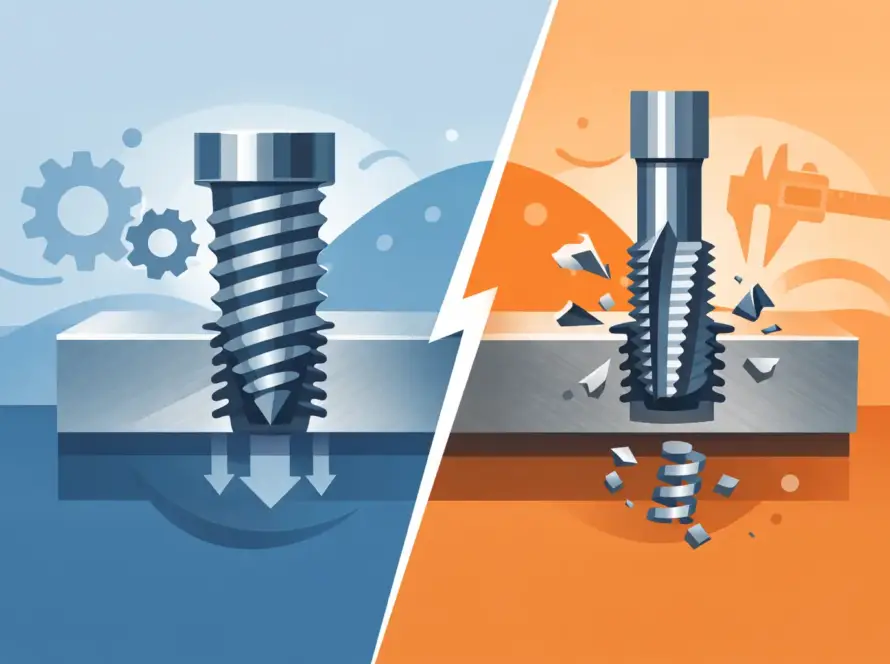
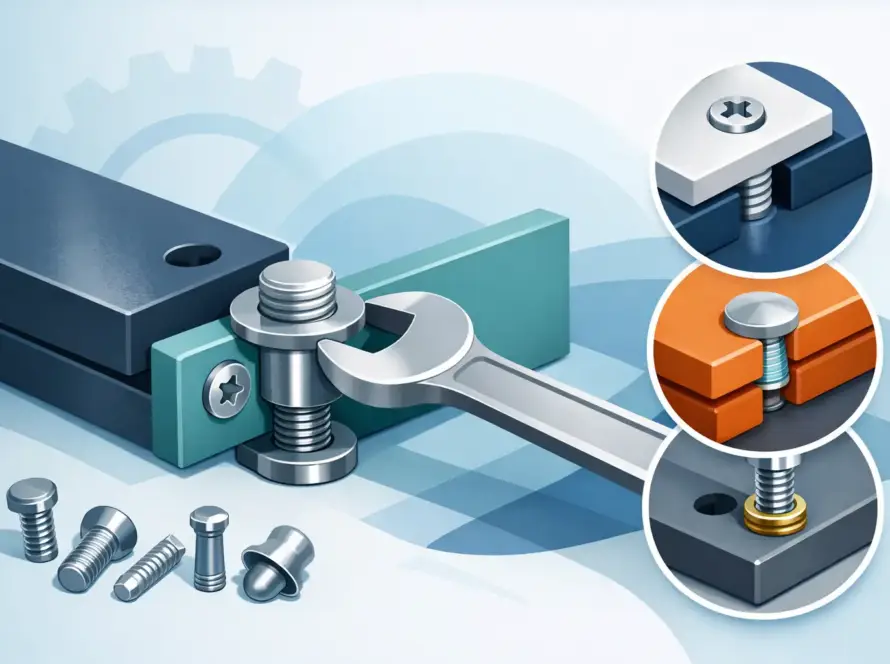
A fastener that passes salt spray on paper can still create problems on the line or in the field. That is why the zinc nickel vs zinc flake decision is rarely just about corrosion hours. For engineers and procurement teams, the real question is which coating gives the required corrosion protection without creating avoidable issues in torque control, dimensional fit, conductivity, rework, or total program cost.
Both systems are proven. Both are widely specified across automotive, heavy equipment, rail, electronics, and industrial assemblies. But they solve different problems, and the wrong choice can show up later as inconsistent clamp load, thread fit concerns, cosmetic variation, galvanic mismatch, or unnecessary cost.
Zinc nickel vs zinc flake: what changes in practice?
Zinc nickel is an electroplated coating, typically with a controlled nickel content that significantly improves corrosion resistance compared with conventional zinc plating. It is often finished with a trivalent passivate and, where needed, a topcoat to tune friction behavior and extend performance.
Zinc flake is a non-electrolytic coating system based on zinc and aluminum flakes in an inorganic or hybrid binder. It is usually applied by dip-spin or spray methods and then cured. Many zinc flake systems also use a separate topcoat to control coefficient of friction, chemical resistance, and color.
On a drawing, these may look like two routes to the same destination: corrosion protection for steel fasteners. In production, they behave differently. Zinc nickel tends to deliver a more metallic, plated finish with good dimensional consistency on threaded parts and good electrical conductivity. Zinc flake tends to perform well where sacrificial corrosion protection, hydrogen embrittlement risk reduction, and high corrosion targets are priorities, especially on high-strength fasteners.
Corrosion performance is only the starting point
Zinc nickel is often selected when a program needs high corrosion resistance with a relatively thin, uniform electroplated layer. In many automotive and industrial applications, it provides excellent base metal protection and strong resistance to white and red rust when properly specified with passivation and topcoat.
Zinc flake also performs at a high level in corrosive environments and is well known for achieving demanding salt spray requirements. It is frequently used in underbody, chassis, structural, and external hardware where environmental exposure is severe. In practice, the difference is not simply which coating lasts longer. It is how each system performs after handling, mating, installation, and real service exposure.
A coating that looks strong in a lab test may still be a poor fit if it cannot maintain friction stability through automated assembly or if edge coverage becomes inconsistent on a specific part geometry. That is why coating selection should follow the application, not just the corrosion target.
Why substrate and geometry matter
Part shape influences coating behavior more than many specifications acknowledge. Zinc nickel generally works well on precision threaded fasteners, captive screws, SEMS assemblies, and smaller engineered parts where tight dimensional control matters. Electroplating can produce a controlled finish, but thread build-up and recess coverage still need evaluation on fine-pitch or close-tolerance parts.
Zinc flake performs well on many external-thread fasteners, clips, washers, and complex shapes, but coating thickness distribution can be less ideal for some internal threads or very tight mating features, depending on the process route and part design. For that reason, the geometry of the fastener and the mating component should be reviewed early, not after approval samples are built.
Hydrogen embrittlement risk and high-strength fasteners
This is one of the clearest dividing lines.
Because zinc nickel is electroplated, hydrogen embrittlement risk must be managed when coating high-strength steel fasteners. Baking after plating is standard practice, but the residual risk cannot be ignored on hardened components. For critical classes and safety-related joints, process discipline and supplier control are essential.
Zinc flake has an advantage here because it is non-electrolytic. That makes it a common choice for high-strength bolts used in automotive, structural, rail, and off-highway applications where embrittlement risk is a serious concern. If the assembly includes hardened bolts in demanding cyclic loads, zinc flake often moves to the front of the discussion quickly.
That does not mean zinc flake is automatically the right answer. If the application needs conductivity, a bright metallic appearance, or very precise thread behavior, zinc nickel may still be preferable, provided the fastener grade and process controls support it.
Torque-tension behavior and assembly consistency
For most OEMs, coating selection becomes an assembly issue before it becomes a corrosion issue. Friction drives clamp load, and clamp load drives joint performance.
Zinc nickel systems can be tuned with topcoats to achieve target friction coefficients, but performance depends on the full coating stack and the mating condition. Zinc flake systems are also commonly engineered with lubricating topcoats to meet narrow friction windows, particularly in automated assembly environments.
The practical difference is consistency over the entire joint system. A coating may test well on a loose fastener but behave differently once paired with a nut, washer, insert, or coated mating surface. Reuse requirements, installation speed, prevailing torque features, and seating materials all affect the result.
For design and manufacturing teams, this means torque data should never be borrowed casually from a similar coated part. It should be validated on the actual joint. This is especially true for joints exposed to vibration, thermal cycling, or mixed materials such as steel into aluminum or coated steel against e-coated structures.
Topcoats are part of the specification, not an afterthought
Many coating comparisons fail because they stop at the base layer. In real assemblies, the topcoat often determines friction performance, chemical resistance, and sometimes field appearance. A zinc nickel fastener with one sealer can behave very differently from zinc nickel with another. The same is true for zinc flake systems.
If your drawing calls out coating but not friction class, mating condition, or sealer requirement, the specification is incomplete. That gap can produce inconsistent installation torque across suppliers or even across lots.
Conductivity, grounding, and contact behavior
Where electrical conductivity matters, zinc nickel often has the edge. Because it is a metallic electroplated layer, it is commonly preferred for grounding points, electronics housings, and assemblies where electrical contact is part of the function.
Zinc flake coatings, especially when paired with certain sealers or topcoats, may not deliver the same contact performance. That is not a defect. It is simply a mismatch if the joint must conduct current or maintain a reliable ground path.
For EV systems, controls, sensors, and electrified equipment, this point deserves early review. A corrosion-resistant coating that interferes with intended conductivity can create a costly late-stage redesign.
Temperature, chemical exposure, and field conditions
Zinc flake coatings are often selected for applications facing elevated temperatures because some systems maintain performance well under thermal exposure where conventional plated systems may discolor or lose effectiveness. That matters in powertrain-adjacent zones, braking systems, exhaust surroundings, and industrial heat environments.
Zinc nickel also performs well in many demanding environments, particularly when chemical resistance and corrosion protection are both required, but the exact outcome depends on passivation and topcoat chemistry. Exposure to cleaners, road salts, fertilizers, oils, hydraulic fluids, and wash processes should all be evaluated against the complete coating system.
In agriculture, mining, and construction equipment, the coating decision often comes down to a mix of abrasion, corrosion, and serviceability. A theoretical lab winner may not remain the better option after repeated tool contact, debris exposure, and field maintenance.
Cost is not just coating price
On unit price alone, either system can appear favorable depending on part size, lot volume, geometry, and supplier route. But coating economics are broader than the invoice line.
Zinc nickel may reduce secondary issues where thread precision, conductivity, or appearance consistency matter. Zinc flake may reduce risk on high-strength parts by avoiding hydrogen embrittlement concerns and may support long corrosion life in harsh service.
The most expensive option is often the one that forces extra validation, line adjustment, assembly slowdown, or warranty exposure. That is why experienced buyers look at coating choice as a total installed cost decision, not a commodity finish decision.
How to choose between zinc nickel and zinc flake
If the fastener is high-strength steel and embrittlement risk is central, zinc flake deserves serious consideration. If the joint needs reliable electrical contact, zinc nickel is often the better fit. If thread tolerance is tight, part geometry is small, or the assembly relies on precise dimensional control, zinc nickel may simplify the specification. If the environment is heavily corrosive and the application already uses proven zinc flake systems with validated friction control, zinc flake may be the more practical route.
For many OEM programs, the answer is not one coating everywhere. It is a coating strategy by joint function. External structural bolts may use zinc flake, while electrical attachment points, small machine screws, or precision captive fasteners use zinc nickel. That approach aligns performance with the actual demands of each assembly.
At KEBA Fastenings, this is typically where the coating conversation becomes more valuable – not at the catalog level, but at the interface between joint design, production requirements, and field performance.
A coating should protect the fastener, but it should also protect the assembly process from avoidable variation. When zinc nickel vs zinc flake is evaluated through that lens, the right choice usually becomes much clearer.