A custom fastener issue rarely starts at the fastener. It usually starts earlier – with an incomplete print, an unclear performance target, or a supplier asked to quote before the application is fully defined. If you are evaluating how to source custom fasteners for a production assembly, the goal is not simply to find a manufacturer willing to make the part. The goal is to secure a fastening solution that performs in the joint, fits your process, and remains supply-stable over the life of the program.
That distinction matters. In automotive, rail, electronics, machinery, white goods, and heavy equipment, a custom fastener can affect clamp load retention, installation speed, vibration resistance, corrosion life, service access, and warranty exposure. Price matters, but unit price alone is a poor filter when the real cost sits in line stoppages, field failures, secondary operations, and long lead-time corrections.
How to Source Custom Fasteners Without Creating Risk
The most efficient sourcing process starts with engineering definition, not RFQ volume. Procurement teams often need pricing quickly, but custom fasteners behave differently from commodity screws, nuts, and bolts. A supplier can quote a part from a drawing and still miss the application risk if the mating material, installation method, load case, or environmental exposure is not clearly stated.
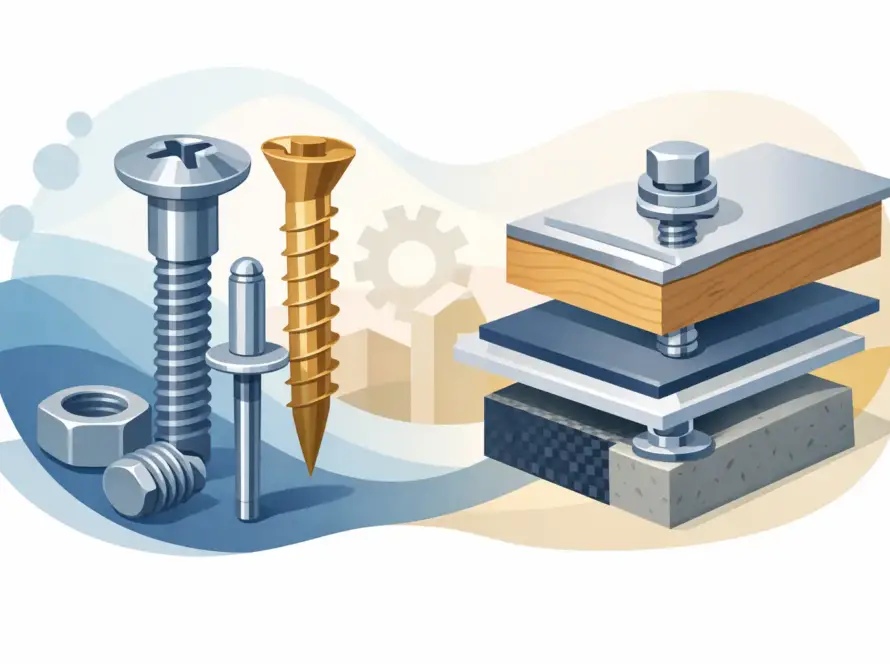
Start by defining the joint, not just the component. Is the fastener going into thermoplastic, thermoset, sheet metal, cast aluminum, hardened steel, or a stacked assembly of mixed materials? Will it be installed by hand, torque tool, robotic spindle, or feed system? Does the joint see dynamic load, thermal cycling, chemical exposure, or repeated service removal? Those inputs shape thread design, head style, drive system, surface finish, hardness window, locking feature, and tolerance strategy.
When teams skip this step, they often over-specify in one area and under-specify in another. A more expensive alloy may be selected when the real need was a better coating. A locking patch may be added when prevailing torque geometry or an anti-vibration design would perform better. A turned part may be sourced as a one-off custom item when a modified standard platform could lower cost and shorten lead time.
Build a Technical RFQ Package That Answers Real Questions
A workable RFQ package for custom fasteners should give the supplier enough information to assess manufacturability and application fit. A drawing is necessary, but it is rarely sufficient by itself.
At minimum, include the part print, annual volume, prototype and production timing, mating material details, required mechanical properties, corrosion expectations, assembly method, packaging requirements, and any quality documentation expectations. If the part interfaces with automation, state feed orientation, head geometry constraints, recess requirements, and dimensional features that affect pickup or installation. If the part is safety-critical, say so early.
This is also where many sourcing projects improve dramatically with a supplier that understands fastening engineering rather than only part production. A technically engaged supplier will question under-head bearing area, pilot design, thread-forming behavior, point geometry, prevailing torque range, and coating thickness effects before those issues become expensive production problems.
Evaluate the Supplier Beyond Quoted Price
If you are comparing suppliers on custom parts, do not treat all quotes as equivalent. Two suppliers may offer the same nominal dimensions and very different outcomes in production.
The first checkpoint is process capability. Ask how the part will actually be made. Will it be cold formed, machined, stamped, thread rolled, heat treated, and plated in-house or through multiple subcontracted stages? Process choice affects consistency, grain flow, lead time, tooling investment, and achievable tolerances. A supplier that can explain the manufacturing route clearly is usually in a better position to control variation.
The second checkpoint is application knowledge. This is especially important for self-tapping screws in plastics, anti-loosening designs, captive fasteners, SEMS assemblies, compression limiters, and high-temperature or high-vibration fasteners. Custom does not always mean fully bespoke geometry. In many cases, the best answer is to adapt a proven fastening system to your assembly rather than start from a blank sheet.
The third checkpoint is supply support. Can the supplier support prototypes, PPAP or equivalent documentation, lot traceability, safety stock, release-based deliveries, and packaging that protects line-side performance? For OEMs and tier suppliers, sourcing risk often sits in logistics discipline as much as product design.
What Good Supplier Conversations Sound Like
A capable supplier will ask pointed questions. They will want to know whether joint failure means stripping, loosening, fatigue, corrosion, head breakage, embedment loss, or operator error. They will ask about installation torque windows, clamp load targets, access limitations, and whether rework is expected.
That kind of discussion is a good sign. It means the quote is being built around performance, not just dimensions. A supplier that only confirms thread size, length, and finish may still be useful for standard hardware, but custom fastening projects usually need more depth.
How to Balance Customization, Lead Time, and Cost
Every custom fastener decision involves trade-offs. More customization can improve assembly performance, but it can also increase tooling cost, qualification time, and minimum order quantity. The right decision depends on program volume, failure cost, and how much performance gain the design change actually delivers.
For low-volume or early-stage programs, a modified standard fastener often makes more sense than a fully custom design. A change in head style, drive recess, coating, captive washer configuration, or thread feature may solve the problem without requiring a new part architecture. For high-volume production, however, a purpose-engineered fastener can reduce installation time, scrap, loosening, or downstream quality costs enough to justify the up-front investment.
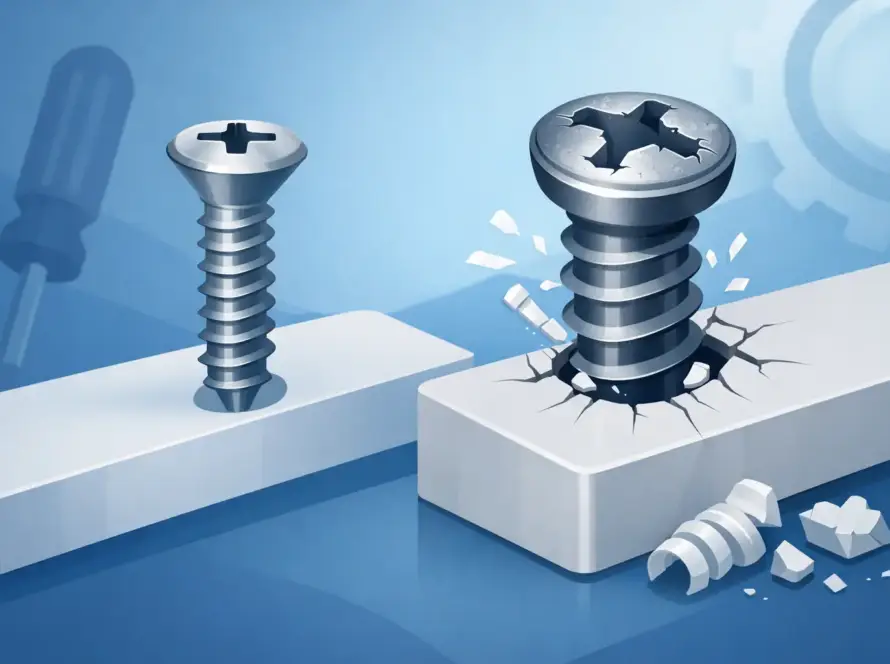
This is especially true in plastics and light alloys, where fastener geometry has a direct effect on boss integrity, insertion torque, and long-term retention. The cheapest screw on paper may create cracked bosses, inconsistent seating, or poor strip-to-drive balance in actual production. In those cases, custom design is not a premium feature. It is a control measure.
Quality Planning for Custom Fastener Sourcing
Quality should be built into the sourcing process before the first article arrives. That means aligning on critical characteristics, inspection methods, acceptance criteria, and change control expectations early.
For some parts, dimensional inspection against the print is enough. For others, you may need torque-tension testing, clamp load verification, hardness validation, salt spray performance, vibration testing, or application-specific insertion and strip-out trials. If the fastener is going into plastic, test in the real resin and molded condition whenever possible. Lab assumptions often fail when wall thickness, glass fill, mold variation, and installation speed enter the picture.
Lot traceability, certification, and revision control also matter more with custom parts than with off-the-shelf hardware. A small process change in heat treatment, coating chemistry, or thread rolling can alter performance in ways that are not obvious from visual inspection alone. Strong documentation discipline protects both procurement and engineering teams from hidden variability.
Common Sourcing Mistakes to Avoid
One common mistake is treating the fastener as a late-stage buy after the assembly design is already locked. That approach limits options and turns the sourcing process into damage control. Another is qualifying the part only for static fit, without testing installation behavior and retained performance over time.
A third mistake is assuming custom automatically means better. Some applications need a specialized solution. Others need a standard proven platform with tighter process control and better logistics. The right answer depends on the joint, the assembly environment, and the business case.
How to Source Custom Fasteners for Long-Term Programs
For ongoing production, sourcing does not end at approval. The stronger approach is to build a supply model that supports demand shifts, engineering updates, and manufacturing continuity.
That means confirming realistic lead times for tooling, samples, production launch, and replenishment. It also means discussing inventory strategy, forecast visibility, packaging optimization, and alternate manufacturing paths if volume ramps or raw material constraints appear. In industrial programs, a fastener that is technically correct but logistically fragile is still a sourcing risk.
This is where a partner with both engineering support and fulfillment capability can make a measurable difference. Companies such as KEBA Fastenings support custom fastening requirements best when they are brought in early enough to evaluate application demands, not just react to a finished print.
The strongest sourcing outcomes usually come from a simple discipline: define the joint clearly, involve technical review early, validate in the real application, and choose a supplier that can support both performance and supply continuity. Custom fasteners should solve assembly problems, not introduce new ones.