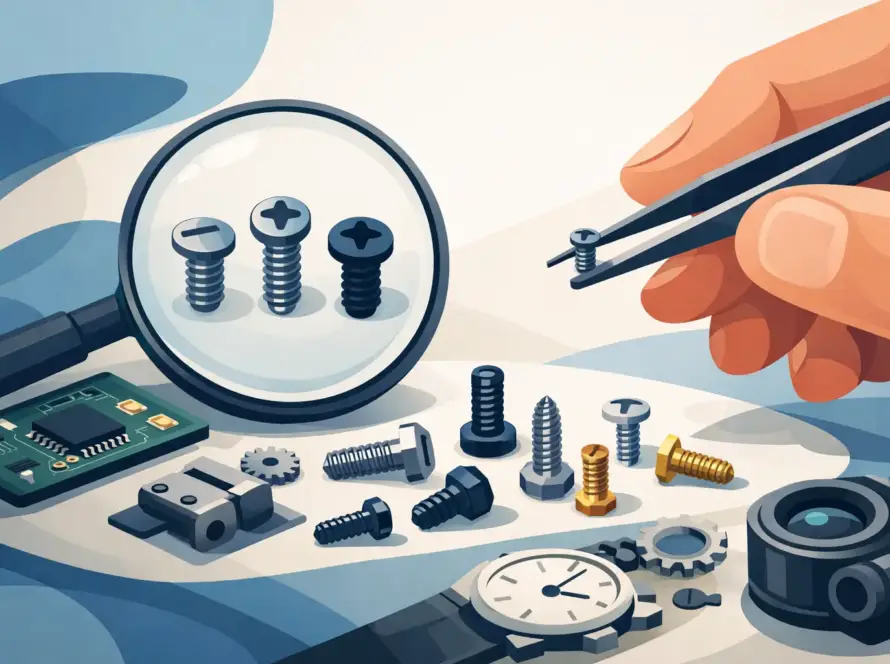
A loose fastener inside an electronics enclosure rarely fails in a dramatic way. More often, it shows up as intermittent grounding, cracked plastic bosses, distorted boards, stripped threads during service, or field returns that are hard to trace back to the joint. That is why selecting the right fasteners for electronics assemblies is an engineering decision, not a line-item purchase.
Electronics assemblies place unusual demands on fastening systems. Components are compact, materials are mixed, torque windows are narrow, and many products must tolerate heat, vibration, repeated service access, and automated assembly. A screw that works well in general industrial hardware may create avoidable problems when applied to a PCB standoff, a molded housing, or a thin sheet metal cover.
What electronics assemblies demand from a fastener
In this sector, the fastener is doing more than joining two parts. It may need to hold preload in a low-strength plastic, protect a sensitive substrate from stress, maintain grounding continuity, support quick assembly, and allow rework without damaging the host material. Those requirements can conflict.
A design engineer may want a smaller screw to save space, while manufacturing may need a drive system that performs consistently under automated installation. Procurement may be under pressure to reduce part count, while service teams need captive hardware to prevent loose components during maintenance. The right answer depends on the assembly, the material stack, and the life cycle of the product.
For that reason, electronics fastener selection usually starts with five variables: base material, access and installation method, vibration environment, serviceability, and available space. Once those are clear, the fastener type becomes easier to define.
Fasteners for electronics assemblies by material and function
Material compatibility is often the first filter. Plastics, light alloys, sheet metal, and spacers all respond differently to thread engagement and clamp load.
Plastics and molded housings
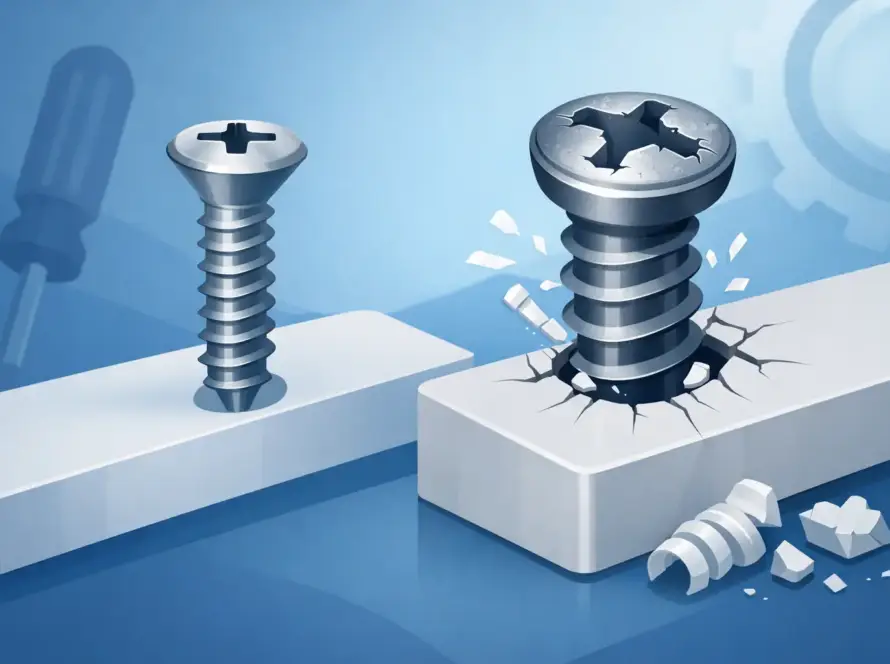
Many electronics enclosures rely on thermoplastics because they reduce weight, cost, and corrosion concerns. Standard machine screws can work in inserts, but they are often the wrong choice for direct engagement into molded bosses. Thread-forming screws designed for plastics create stronger, more reliable joints by displacing material rather than cutting it away aggressively.
That distinction matters. A poorly matched thread profile can increase hoop stress in the boss, leading to cracking either at assembly or later in thermal cycling. In production, it can also widen torque variation and raise strip-out risk. For electronics housings that need repeatable installation, service access, and stable clamp load, the screw geometry should be selected around the resin type, wall thickness, and boss design.
If the enclosure will be opened frequently, metal inserts may still be the better route. They increase cost and process steps, but they improve thread durability and can stabilize long-term performance where repeated removal is expected.
Sheet metal and thin-walled structures
Control boxes, shielding features, and covers commonly use thin sheet metal. In those cases, thread-forming or thread-cutting solutions may be practical, but the decision depends on thickness and required removal cycles. If the panel is thin and service access is frequent, a nut, clinch feature, or captive arrangement may provide a better long-term result than relying on marginal thread engagement.
Here, assembly speed often drives the decision. A fastener that installs quickly but creates rework due to cross-threading or inconsistent seating is not actually saving time. Drive engagement, point geometry, and alignment during automated feeding all affect throughput.
Circuit boards, standoffs, and precision subassemblies
When fastening near a PCB, tolerance control becomes critical. Excess clamp load can bow the board, affect connector alignment, or stress solder joints. In these applications, small-diameter screws, precision turned parts, spacers, and compression limiters may be part of the fastening strategy rather than optional extras.
Compression limiters are especially useful where a screw passes through plastic but the assembly needs controlled clamp load on an internal component. They prevent over-compression of the plastic and improve repeatability. In compact electronics, that can be the difference between a stable assembly and a latent failure mode.
Thread form, drive system, and installation control
Fastener selection for electronics assemblies is not only about what holds. It is also about what assembles cleanly at scale.
Thread form affects installation torque, strip-out margin, and clamp retention. Drive system affects bit engagement, cam-out behavior, and wear in automated tools. In high-volume production, these details have direct labor and quality consequences.
Drive systems such as TORX® and TORX PLUS® variants are widely used because they support stable torque transfer and reduce the tendency for driver slip compared with older recess styles. That can help protect cosmetic surfaces, improve consistency in automated assembly, and reduce operator fatigue in manual stations. The exact choice still depends on head size, available tool access, and required torque values.
SEMS screws also deserve attention in electronics manufacturing. By preassembling the screw with a captive washer or washer set, they reduce handling steps and help control orientation and load distribution. In production cells where cycle time and part presentation matter, that can simplify the process significantly.
Captive screws offer a different kind of advantage. For access panels, service covers, and modules that must be opened without losing hardware, a captive design improves maintenance efficiency and reduces the risk of foreign object contamination inside the assembly.
Vibration resistance and long-term reliability
Not all electronics live on a quiet bench. Controls mounted on industrial machinery, vehicle electronics, railway systems, power equipment, and outdoor cabinets can see sustained vibration. In those environments, loosening resistance becomes central to joint design.
A standard screw with adequate initial torque may still lose preload over time if the joint materials settle or vibrational loads work against the interface. High performance anti-loosening solutions, locking nuts, prevailing torque features, and purpose-designed bolt systems can improve retention, but the best option depends on access, available envelope, and service expectations.
There is a trade-off here. Some locking methods improve resistance to loosening but increase installation torque scatter or make removal less convenient. Others support reusability but require tighter process control. The correct decision depends on whether the assembly is sealed for life, maintained in the field, or produced in very high volumes where every second of installation time matters.
Corrosion, conductivity, and mixed-material risk
Electronics assemblies often combine plated steel, stainless steel, aluminum, copper alloys, and engineered plastics. That introduces compatibility questions beyond pure mechanical strength.
If the fastener contributes to grounding or shielding continuity, the plating system and contact interface matter. If the assembly will operate in humid or chemically exposed conditions, corrosion resistance becomes more than an appearance issue. Galvanic interaction between dissimilar metals can degrade both joint integrity and electrical performance over time.
This is why material and finish should be reviewed as a system. A stainless screw may sound like the safe choice, but it is not automatically the best answer if galling, conductivity, strength class, or mating material behavior create new issues. In many assemblies, plated carbon steel remains the better engineered option provided the finish matches the environment and compliance requirements.
Designing for production, not just prototype success
A fastening concept that works on ten prototype units can fail once it reaches a production line. Electronics manufacturing exposes weak decisions quickly because tolerances stack up, operator variation appears, and cycle-time pressure increases.
For production readiness, engineers should ask practical questions early. Can the fastener be fed reliably? Is the head accessible with the intended tool? Does the joint need poka-yoke features to prevent misassembly? Will the torque window stay stable across material lot variation? Can the assembly tolerate rework without damaging threads or housings?
These are the points where a technical fastening partner adds value. Product breadth matters, but application support matters just as much. In electronics, a small adjustment to thread geometry, washer configuration, captive feature, or custom turned part can prevent line stoppages and reduce field failures. That is often where KEBA Fastenings supports OEMs most effectively – matching fastening performance to the realities of design, assembly, and supply.
When standard parts are enough and when custom makes sense
Not every electronics project needs a custom fastener. Standard machine screws, micro screws, locknuts, or SEMS configurations are often the most efficient choice when the joint is conventional and the production environment is stable.
Custom or application-specific solutions become more compelling when space is limited, materials are difficult, vibration is severe, or assembly efficiency is being constrained by the fastener itself. A modified head, special point, nonstandard washer stack, captive feature, or custom turned component may remove multiple downstream problems at once. The unit cost may be higher, but the installed cost can be lower once scrap, labor, downtime, and service exposure are considered.
That is the useful discipline in electronics fastening selection: evaluate the whole joint, not just the catalog description. A fastener should fit the material, support the assembly method, hold under real operating conditions, and remain practical for sourcing and service. If it only solves one of those requirements, it is probably the wrong part.
The best electronics assemblies rarely call attention to their fasteners. That is exactly the point. When the joint is properly engineered, production runs cleaner, service goes faster, and reliability stays where it belongs – in the background, doing its job.