When a compact assembly fails, the root cause is often not the housing, PCB, or insert – it is the fastener selection. That is why understanding how to choose micro screws matters early in design, sourcing, and process planning. In miniature assemblies, small dimensional changes can affect strip-out torque, clamp load, installation speed, and long-term reliability far more than many teams expect.
Micro screws are not simply standard screws in smaller diameters. As size decreases, tolerances tighten, tool engagement becomes less forgiving, and the relationship between material, thread geometry, and installation method becomes more critical. For OEMs and contract manufacturers working with electronics, compact mechanical devices, medical-adjacent equipment housings, or precision subassemblies, the right specification reduces rework and supports stable production.
How to choose micro screws starts with the joint
The first decision is not head style or drive system. It is the joint itself. You need to define what the screw is being asked to do – retain a cover, clamp stacked components, cut threads into plastic, mate with a tapped metal part, or hold alignment under vibration.
A micro screw used in a light-duty enclosure behaves very differently from one used in a compact motor assembly or a tightly packaged electronic module. If the joint sees repeated service access, drive durability and thread wear become central. If the assembly is permanent, installation efficiency and pull-out performance may matter more than removability.
Start with the base materials on both sides of the joint. Plastic, aluminum, stainless steel, brass, and thin sheet each place different demands on thread form, engagement length, and installation torque. In small-format assemblies, choosing a screw before confirming material behavior is a common source of cracking, boss failure, stripped threads, or inconsistent clamp force.
Match screw type to material behavior
For metal-to-metal joints, machine screws are typically the right starting point where tapped holes or inserts are available. The key variables are thread standard, class of fit, and engagement length. In micro sizes, insufficient thread engagement can lead to thread shear well before the screw reaches intended clamp load.
For plastic assemblies, thread-forming micro screws often outperform generic machine screws because they are engineered to create durable mating threads with lower radial stress. That trade-off matters. A machine screw into a molded boss with an insert can provide repeatable serviceability, but it adds component and installation cost. A direct thread-forming screw can simplify the bill of materials and assembly process, but only if the boss geometry, resin type, and installation window are properly engineered.
Thermoplastics and thermosets should not be treated the same way. Thermoplastics allow some deformation and recovery, while thermosets are more brittle and less tolerant of radial expansion. In miniature bosses, that difference becomes significant. The wrong thread profile can split the boss during assembly or reduce long-term retention.
If you are fastening into thin sheet or light alloys, head bearing area and thread engagement become limiting factors quickly. In these cases, a micro screw may need support from formed features, inserts, or a revised stack-up rather than simply a longer screw.
Size selection is more than diameter
Diameter gets most of the attention, but micro screw performance depends on the full geometry: major diameter, pitch, thread length, point style, head diameter, and under-head bearing surface. A smaller screw may fit the envelope, yet still fail in production if the drive recess is too shallow for repeatable torque transmission or if the head does not distribute load adequately.
Thread pitch affects both holding strength and assembly behavior. Fine threads can offer more adjustment precision and may suit some metal applications, but they are also more sensitive to contamination, damage, and cross-threading in very small sizes. Coarser thread forms may be better for plastics or faster assembly, depending on material and joint design.
Length should be chosen based on effective engagement, not visual fit. In micro assemblies, excess length can bottom out in blind holes or interfere with internal components. Too little engagement reduces pull-out resistance and makes torque readings less meaningful because the joint fails before proper preload is reached.
Head style also deserves careful review. Pan heads, low-profile heads, countersunk heads, and specialty geometries each change how load is transferred to the clamped material. A flush finish may look attractive, but countersinking miniature parts removes material and can weaken thin sections. In many precision assemblies, a low-profile head delivers a better balance between clearance and structural performance.
Drive system selection affects assembly yield
One of the most overlooked parts of how to choose micro screws is the drive. In small screws, the drive recess is not just a convenience feature. It directly affects bit engagement, torque control, cam-out risk, and operator consistency.
A drive that performs well at larger sizes may become difficult to control when miniaturized. Better bit retention and more stable torque transfer can reduce scrap, especially on automated lines or in high-volume manual assembly. That is particularly relevant when fasteners are installed near sensitive components where bit slip can damage finished parts.
The best choice depends on the assembly environment. Manual bench assembly may favor one drive style, while robotic or semi-automated installation may favor another with stronger centering and reduced wear. Procurement teams should evaluate drive compatibility with existing tooling, while manufacturing engineers should confirm whether the selected recess supports repeatable torque delivery at cycle time.
Captive screw configurations or pre-assembled SEMS-style solutions may also improve handling in miniature assemblies where loose hardware slows production or creates foreign object risk. The added component cost can be offset by higher throughput and fewer line disruptions.
Material and finish must fit the environment
Micro screw material selection is often constrained by corrosion, magnetism, electrical behavior, weight, and strength. Carbon steel may be economical and strong, but it may not be suitable in humid, corrosive, or appearance-sensitive applications without the right finish. Stainless steel improves corrosion resistance, though grade selection matters and torque-tension behavior differs from alloyed steel.
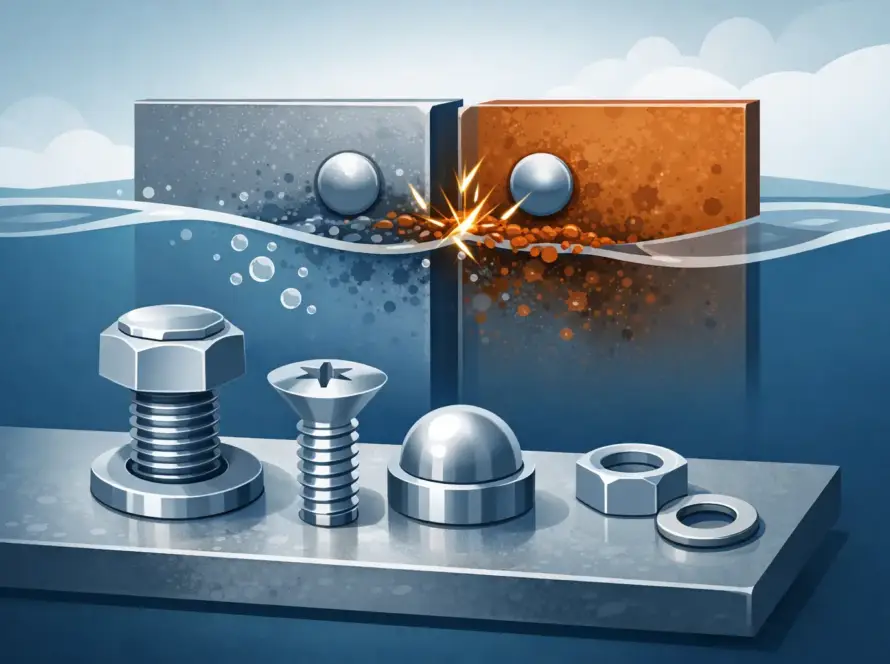
In compact electronics or sensor housings, nonmagnetic performance, conductivity considerations, or galvanic compatibility may influence the specification. If the screw joins dissimilar metals, the environment should be reviewed for corrosion potential. In outdoor, transport, or vibration-prone applications, surface treatment needs to support both corrosion resistance and consistent installation performance.
Finish thickness also matters more at micro scale. A coating that is routine on larger hardware can interfere with thread fit or recess definition on very small screws. That can create installation variability before the product ever reaches the field.
Torque, preload, and failure modes need early validation
Micro fasteners operate with a smaller margin for error. A torque setting that looks conservative on paper may still strip a plastic boss, deform a thin cover, or damage the drive recess. On the other hand, under-torquing can allow loosening, gasket leakage, or electrical grounding issues.
This is why torque should be developed as part of joint validation, not copied from a similar assembly. Material variation, molded part tolerances, pilot hole dimensions, tool condition, and operator method can all shift the acceptable process window. For plastics, clamp load retention over time is especially important because creep can reduce joint integrity.
Vibration is another area where assumptions create problems. Small screws are not immune to self-loosening. If the assembly sees cyclic loading, transport shock, or continuous motion, you may need a thread-locking feature, prevailing torque element, specialized thread geometry, or a redesigned joint that improves friction stability.
Sourcing strategy matters as much as the print
A technically correct micro screw can still create production risk if supply is inconsistent or dimensional control varies from lot to lot. At these sizes, minor deviations in recess geometry, thread form, straightness, or coating can show up immediately on the line as driver slip, feeding issues, or torque scatter.
That makes supplier capability part of the selection process. Procurement and engineering should align on more than unit price. Review process control, dimensional consistency, packaging for small-part handling, and whether custom modifications are available if the standard part creates assembly compromise.
For many manufacturers, the best result comes from working with a fastening partner that can evaluate the application rather than simply quote a catalog item. KEBA Fastenings supports that approach with application-specific fastening expertise across miniature, plastic, metal, and vibration-sensitive assemblies.
Practical checks before final release
Before locking the specification, confirm five points in validation: the screw matches the parent material, the drive works with actual tools on the line, the head style suits the stack-up, the torque window is proven, and supply quality is stable enough for production volume. These checks are basic, but skipping any one of them can turn a very small component into a large reliability issue.
Micro fasteners reward disciplined engineering. The right choice supports repeatable assembly, protects delicate components, and improves field performance without adding unnecessary complexity. If the joint is doing critical work, treat the screw as a design element, not a commodity part.