A production line does not stop because a fastener is inexpensive. It stops because the wrong part, late shipment, or inconsistent lot turns a small component into a major constraint. That is why industrial fastener supply chain solutions matter far beyond purchasing. They affect line uptime, assembly quality, warranty risk, and the ability to keep complex manufacturing schedules on track.
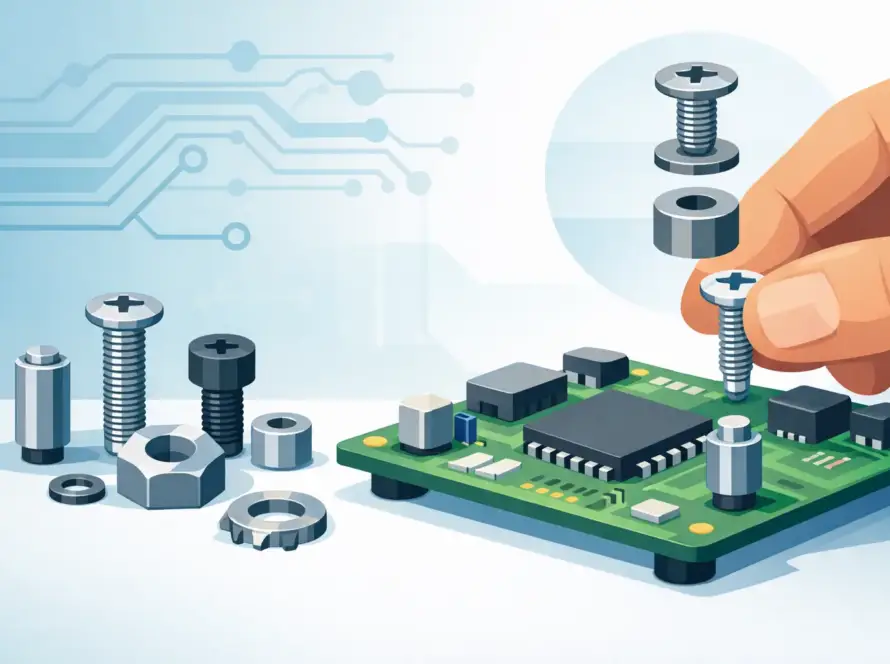
For OEMs and industrial manufacturers, fasteners sit at the intersection of design intent, material compatibility, installation method, and replenishment discipline. A standard hex bolt may be easy to source in stable conditions. A micro screw for electronics, a thread-forming screw for thermoplastics, a high performance anti-loosening bolt for vibration, or a captive assembly component for repetitive service access is a different supply chain problem entirely. In those environments, the supply base has to support engineering requirements as much as order fulfillment.
What industrial fastener supply chain solutions actually solve
At a practical level, industrial fastener supply chain solutions are not just about getting parts from a warehouse to a plant. They solve a wider set of issues that appear when fastening performance and production continuity are both non-negotiable.
The first issue is specification accuracy. Many supply disruptions start upstream, before procurement places an order. If a drawing is incomplete, if thread geometry is mismatched to plastic or light alloy substrates, or if torque and clamp load assumptions are not aligned with field conditions, the resulting sourcing activity becomes reactive. Parts may be available, but not suitable.
The second issue is variability. Fasteners are often treated as interchangeable until assembly data says otherwise. Dimensional variation, coating inconsistency, material substitutions, and poor drive engagement can reduce installation speed and increase scrap. In high-volume lines, even a minor increase in stripping, cross-threading, or feeder jams creates measurable cost.
The third issue is inventory strategy. Stocking every possible part number ties up capital, but running lean without demand visibility can expose production to shortages. The right answer depends on volume profile, lead time, criticality, and how difficult a part is to replace. Commodity hardware allows more flexibility. Application-specific components usually do not.
Why the fastener category is harder than it looks
Many procurement teams inherit a fragmented fastener base built over years of product revisions, supplier changes, and plant-specific buying habits. On paper, that looks manageable because unit prices are low. In practice, it creates hidden complexity.
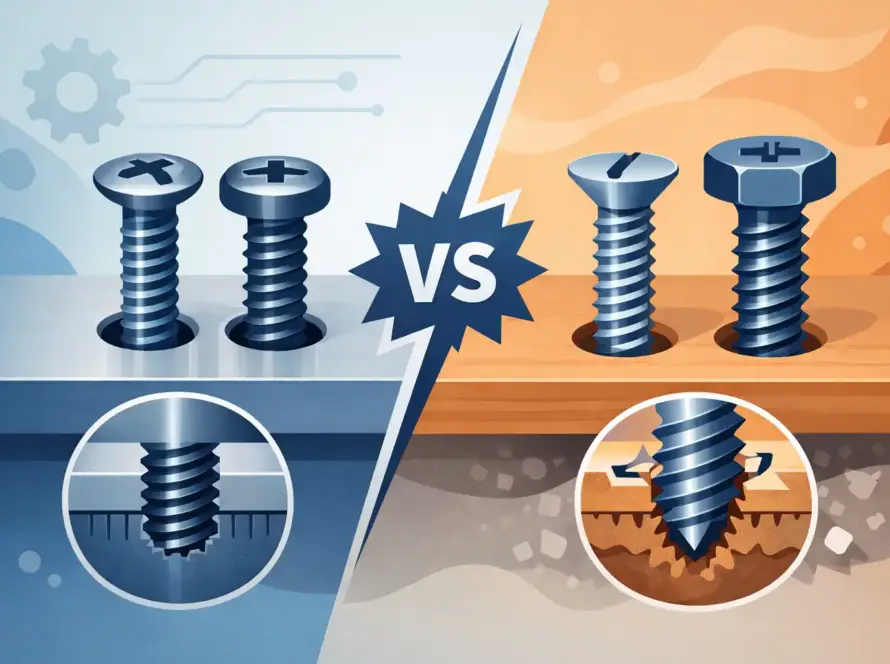
A single assembly may require machine screws, locking nuts, SEMS screws, compression limiters, thread-forming screws for polymers, and anti-vibration hardware for dynamic loads. Each part may have different material, finish, packaging, traceability, and performance requirements. If those items are sourced through separate channels with inconsistent technical review, the supply chain becomes harder to control.
There is also the question of application environment. Railway, automotive, off-highway, oil and gas, renewable energy, and industrial machinery do not place the same demands on a joint. High vibration, thermal cycling, corrosion exposure, repeated maintenance access, and mixed-material assemblies change what a viable fastener looks like. The more demanding the application, the less useful a price-only sourcing model becomes.
Engineering support is part of the supply chain
The strongest industrial fastener supply chain solutions start before the purchase order. They begin with application review.
When a supplier understands load paths, substrate materials, installation method, service conditions, and assembly sequence, the supply chain becomes more stable because the part itself is better matched to the job. That can mean selecting a thread-forming design optimized for thermoplastics instead of defaulting to a generic screw. It can mean using a captive screw to reduce loose-part handling during service. It can mean specifying a locking feature that maintains clamp load in extreme vibration instead of relying on secondary correction later.
This engineering layer matters because the easiest part to source is the one that was specified correctly the first time. It reduces redesign cycles, unplanned substitutions, and plant-level workarounds that introduce risk.
There is a trade-off, of course. More specialized fasteners can increase qualification time or narrow the immediate supplier pool. But for safety-critical or high-throughput manufacturing, the cost of an oversimplified specification is often much higher than the cost of a more deliberate sourcing strategy.
The logistics side of industrial fastener supply chain solutions
Once the technical specification is under control, logistics determines whether supply performance holds up in real production conditions.
Fastener logistics are often underestimated because the parts are small. Yet small parts generate large transactional volume. Different bins, line-side packaging requirements, replenishment cycles, and lot controls all affect operational efficiency. A supplier that can support stock-based fulfillment, scheduled releases, customer-specific stocking plans, and packaging aligned to production use can remove friction from the plant floor.
Lead time management is especially important for specialized components such as turned parts, stamped parts, custom bolts, or branded drive-system variants. These parts may require tighter forecasting, buffer agreements, or planned inventory positions. Without that structure, manufacturers are left managing shortages with expedites, substitutions, or line interruptions.
There is also a packaging and presentation element that influences assembly performance. Bulk-packed fasteners may be acceptable for one operation and inefficient for another. Automated feeding, kitting, and operator access all benefit from packaging that matches the installation process. This is not a cosmetic issue. It affects labor time, error rates, and material handling efficiency.
How to evaluate a supply chain partner for fastening systems
An effective supplier should be able to do more than quote a part number. For industrial buyers, the real question is whether the supplier can reduce risk across both design and supply.
Start with technical breadth. A partner that supports micro screws, thread-forming screws for plastics, anti-loosening fasteners, captive hardware, locking nuts, and customer-specific parts is better positioned to consolidate sourcing and recommend fit-for-application alternatives when constraints appear.
Then look at manufacturing support. Quality consistency depends on process control, dimensional discipline, material verification, and finish reliability. If a supplier cannot explain how it maintains repeatability, you are buying uncertainty.
Next, assess logistics capability. Can the supplier support stocking programs, scheduled deliveries, demand variability, and plant-specific packaging? Can it handle project ramps as well as stable replenishment? Strong logistics support is what turns a technically capable supplier into a dependable production resource.
Finally, test responsiveness during change. Engineering changes, demand spikes, and obsolescence events are where weak supply chains show themselves. A supplier that can provide practical substitution guidance, custom production support, and inventory planning input is far more valuable than one that only reacts to immediate orders.
Where standardization helps and where it does not
Standardization is useful, but only to a point. Reducing unnecessary part proliferation can simplify planning, improve purchasing leverage, and lower inventory burden. That is good supply chain practice.
But aggressive standardization can create problems when assemblies involve plastics, sheet metal, light alloys, high heat, or sustained vibration. In those cases, forcing one fastener strategy across every platform may lower part count while increasing field failures, installation problems, or assembly time. The better approach is controlled standardization – commonization where function allows, specialization where performance demands it.
This is where an engineering-oriented supplier adds value. Instead of treating every fastener as a commodity, the supplier helps define which parts can be rationalized and which ones need application-specific design.
Building resilience without overbuying
Manufacturers are under pressure to improve resilience without tying up excess working capital. That makes fastener strategy more nuanced than simply carrying more stock.
A better model balances criticality and predictability. High-risk, hard-to-replace, or custom components may justify buffer stock or dedicated supply agreements. More common parts may be managed through leaner replenishment models. The point is not maximum inventory. The point is protecting production where substitution is difficult and keeping flexibility where it is not.
For many OEMs, the most effective industrial fastener supply chain solutions combine three elements: engineered product selection, disciplined quality control, and logistics planning built around actual production behavior. When those elements work together, the result is fewer assembly disruptions, stronger joint reliability, and better control over cost beyond piece price.
KEBA Fastenings operates in that space by combining specialized fastening knowledge with supply and logistics support tailored to demanding industrial applications.
Fasteners may be small, but the supply chain decisions behind them are not. When the part, the process, and the replenishment model are aligned, procurement gains leverage, engineering reduces failure risk, and operations gets what it needs most – a line that keeps moving.