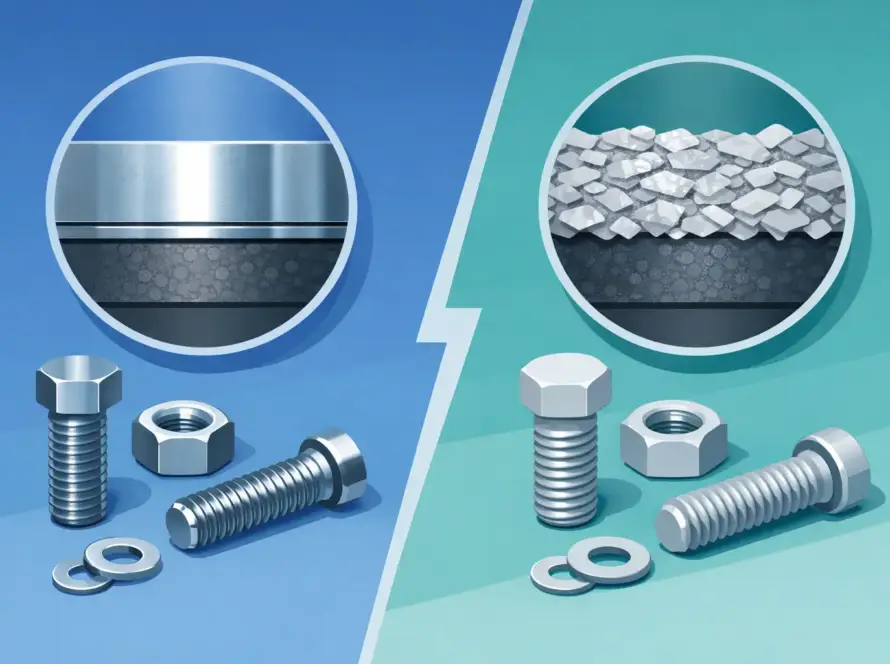
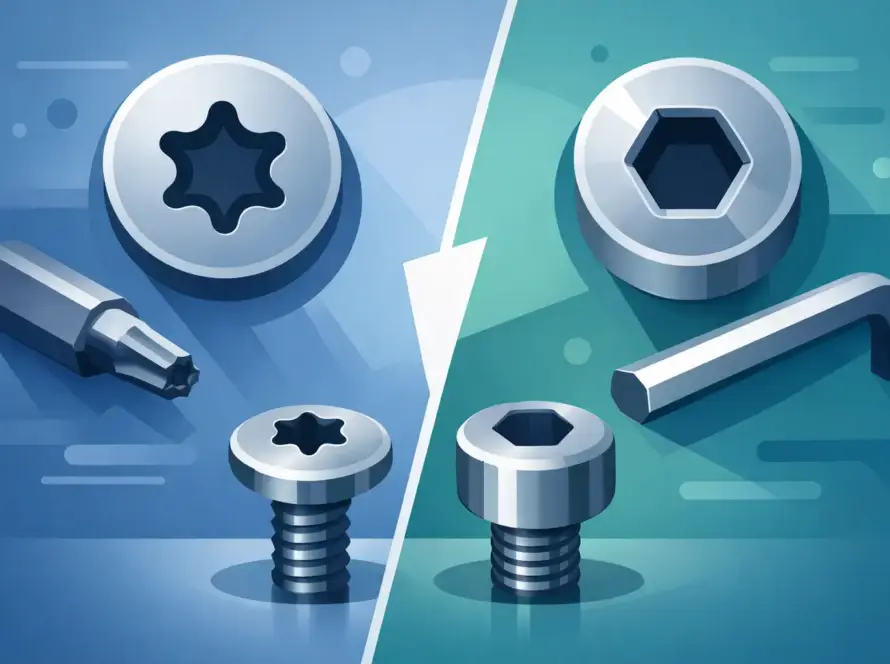
A fastening decision that looks minor on a print can become a recurring production problem on the floor. In the debate over machine screws vs thread forming, the right choice affects clamp load consistency, installation torque, rework risk, cycle time, and the long-term durability of the joint.
For design engineers and sourcing teams, this is not simply a question of whether a fastener fits the hole. It is a question of how the joint will be assembled, what material will carry the thread, how often the connection will be serviced, and what level of process control the application demands. A machine screw and a thread-forming screw can both create secure joints, but they do it in fundamentally different ways.
Machine screws vs thread forming: the core difference
A machine screw is designed to mate with a pre-existing internal thread. That thread may be cut into a metal component, formed in a nut, rolled into a threaded insert, or integrated into another precision feature. The screw engages a finished thread profile, which means the quality of the joint depends heavily on the quality and tolerance of the tapped hole or mating part.
A thread-forming screw creates its mating thread during installation. Instead of cutting material away, it displaces material to form a matching internal thread in the parent material. This approach is widely used in plastics and certain light alloys where the material can deform in a controlled way without cracking or excessive stress concentration.
That difference changes everything downstream. With machine screws, you are managing a two-part thread system made before final assembly. With thread-forming screws, the final thread geometry is created as part of the assembly process itself.
Where machine screws make more sense
Machine screws remain the standard choice when the application requires precision, repeatability, and frequent disassembly. In metal assemblies, especially where components are serviceable or where maintenance access is expected, a machine screw paired with a tapped hole or threaded insert offers a predictable and familiar fastening method.
This matters in equipment housings, electrical assemblies, control systems, railway interiors, and machinery components where tolerances are tight and the joint may be opened multiple times over the product life. A properly tapped metal thread generally supports good clamp load control and repeat assembly without significantly degrading the mating thread, assuming torque is managed correctly.
Machine screws are also the better option when the base material cannot tolerate thread-forming stresses. Harder metals, brittle materials, and thin sections that lack enough material for stable thread generation often call for a pre-tapped thread or insert solution instead.
There is a trade-off, of course. Machine screw assemblies usually require more upstream processing. Tapping, cleaning, thread verification, and insert installation all add cost and complexity. If the production objective is reducing secondary operations, that extra preparation can become a meaningful disadvantage.
Where thread-forming screws deliver an advantage
Thread-forming screws are often selected to simplify assembly and reduce total system cost. In thermoplastics especially, they eliminate the need for a pre-tapped thread and can reduce the number of components required in the joint. That can improve line efficiency while lowering tooling and handling steps.
For many plastic housings, covers, and structural molded parts, thread-forming screws are engineered to produce strong, repeatable joints with good pull-out performance when boss design, pilot hole diameter, and material choice are aligned. The fastener geometry does the work of creating the mating thread, which can be highly efficient in high-volume production.
They are also valuable in applications where weight reduction matters. Replacing metal inserts or secondary threaded hardware with a direct thread-forming solution can support lighter assemblies and fewer part numbers. In sectors such as electronics, white goods, automotive interiors, and some light industrial products, that can produce a measurable benefit.
The limitation is that thread-forming performance depends heavily on material behavior. The same screw can perform very differently in glass-filled nylon, unfilled polypropylene, or a die-cast light alloy. If the material is too brittle, too thin, or poorly supported by the joint design, installation torque can spike and the formed thread may not provide the durability the application requires.
Material compatibility is usually the deciding factor
When engineers compare machine screws vs thread forming, material compatibility usually settles the issue faster than fastener preference. Metals with sufficient hardness and applications requiring repeated service generally favor machine screws. Plastics and ductile non-ferrous materials often favor thread-forming designs, but only if the geometry is engineered correctly.
In plastics, boss diameter, engagement length, wall thickness, and pilot hole size all influence performance. A thread-forming screw is not a shortcut around design discipline. It is a system solution that depends on the right screw style and the right molded feature. Poor boss design can lead to hoop stress, cracking, creep-related clamp loss, or stripping during installation.
In metal, machine screws offer cleaner predictability when used with tapped holes or inserts. A formed thread in a softer alloy may work well in some cases, but if the joint sees high clamp loads, repeated maintenance, or strict torque-tension requirements, the controlled thread condition of a machine screw assembly usually gives the engineering team more confidence.
Assembly speed, labor, and process control
From a manufacturing perspective, thread-forming screws can remove a process step and shorten cycle time. There is no separate tapping operation, no tap breakage risk, and no need to manage chip contamination from cut threads. In large production runs, those advantages are hard to ignore.
That said, installation control becomes more critical. The drive system, speed, torque window, and seating strategy must be matched to the material and screw design. A thread-forming screw typically has a forming phase and a clamp phase. If the tool cannot distinguish between them or the process window is narrow, the risk of stripping increases.
Machine screws tend to be easier to manage when the internal thread is already qualified. The tool is primarily seating the fastener rather than generating the thread. That often gives a more familiar torque signature and can simplify validation in automated or semi-automated assembly.
So the choice is not simply faster versus slower. It is better to think in terms of where the complexity sits. Thread-forming moves more of the thread creation into final assembly. Machine screws move more of the work upstream into component preparation.
Serviceability and field performance
If the joint must be opened and closed multiple times, machine screws usually have the advantage. A metal thread or insert is generally more forgiving across repeated service cycles than a formed thread in plastic. This is especially relevant for maintenance panels, control enclosures, heavy equipment access points, and assemblies that may be serviced in the field under less-than-ideal conditions.
Thread-forming screws can still be used in serviceable assemblies, but the margin for error is smaller. Repeated removal and reinsertion can wear the formed thread, particularly if technicians cross-thread the screw or use uncontrolled tools. In some plastic applications, that leads engineers to specify a thread-forming screw for initial production assembly and a threaded insert when long-term service access is expected.
Vibration also matters. Neither fastener type is automatically vibration-proof. Joint security depends on clamp load retention, material creep behavior, and whether additional locking features are used. A machine screw in a metal thread may pair more easily with prevailing torque elements or other anti-loosening strategies. A thread-forming screw in plastic may need extra attention to creep resistance and seating design if the assembly sees thermal cycling or sustained load.
Cost should be evaluated at the assembly level
Piece price alone can distort the decision. A machine screw may cost less than a specialized thread-forming screw, but the full assembly cost may be higher if tapping, inserts, extra components, and longer cycle times are required. On the other hand, a lower-component thread-forming solution may become expensive if scrap rates increase because the boss design was not optimized.
This is where application-specific evaluation matters. Procurement teams often need a clean cost comparison, but engineering value comes from looking at the total installed cost of the joint, not just the fastener carton price. Labor, tooling wear, quality fallout, maintenance requirements, and warranty exposure all belong in the calculation.
For OEMs with mixed-material assemblies, it is common for both systems to remain in use across the same product platform. That is not inefficiency. It is usually a sign that the fastening strategy is aligned to each material and service condition rather than forced into a one-size-fits-all standard.
How to choose between them
If the joint is in metal, requires frequent service, or depends on tight torque-tension control, a machine screw is often the safer engineering choice. If the joint is in plastic, high-volume, and designed around efficient assembly with the correct boss geometry, thread-forming can deliver excellent performance with fewer process steps.
The wrong choice usually shows up in familiar ways: stripped bosses, cracked housings, inconsistent torque signatures, field loosening, or unnecessary manufacturing cost. The right choice comes from treating the fastener, parent material, tool setting, and joint design as one system.
That is why fastener selection works best when it starts early in the design cycle, not after the drawing is released. A well-engineered fastening strategy does more than hold parts together. It protects throughput, reduces variability, and gives the finished product a better chance of performing as designed long after it leaves the line.